



If you are deciding between Meridian and Boise, you are really choosing between two different day-to-day rhythms in the same metro. Both cities give you access to the Treasure Valley, but the feel, housing mix, and commute patterns can be meaningfully different once you start touring in person. This guide will help you compare price points, housing options, and lifestyle tradeoffs so you can choose the home base that fits the way you want to live. Let’s dive in.
Meridian vs. Boise at a glance
Meridian and Boise sit close together, but they are not interchangeable. Boise is the larger, more established city, while Meridian has been growing much faster in recent years.
From 2020 to 2024, Meridian’s population rose from 117,635 to 139,740, a gain of 18.6%. Over that same period, Boise grew from 235,684 to 237,963, or 1.0%. In practical terms, that helps explain why Meridian often feels newer and more expansion-oriented, while Boise tends to feel more built out and established.
City planning documents also reflect that difference in identity. Meridian describes itself as a livable, vibrant, and connected community that is still evolving. Boise’s official materials put more emphasis on downtown culture, the Greenbelt, and foothills recreation, which aligns with the more urban, amenity-rich feel many buyers notice right away.
Housing stock feels different
One of the clearest differences between Meridian and Boise is the type of housing you will see as you tour. If you spend one afternoon in each city, the contrast usually becomes pretty obvious.
Boise has a broader mix of housing types. The city’s 2024 housing analysis says Boise had 104,665 housing units, with 73.2% single-family homes. It has also seen notable growth in areas like Downtown and West Bench, and nearly all new downtown-area units added since 2019 have been multifamily or missing-middle housing.
Meridian leans more heavily toward single-family living. City data shows 82.9% of Meridian’s housing stock was single-family in 2020, with 17.1% multifamily. Meridian’s 2024 annual report also recorded 1,376 single-family dwelling permits compared with 11 multifamily development permits, reinforcing its newer subdivision profile.
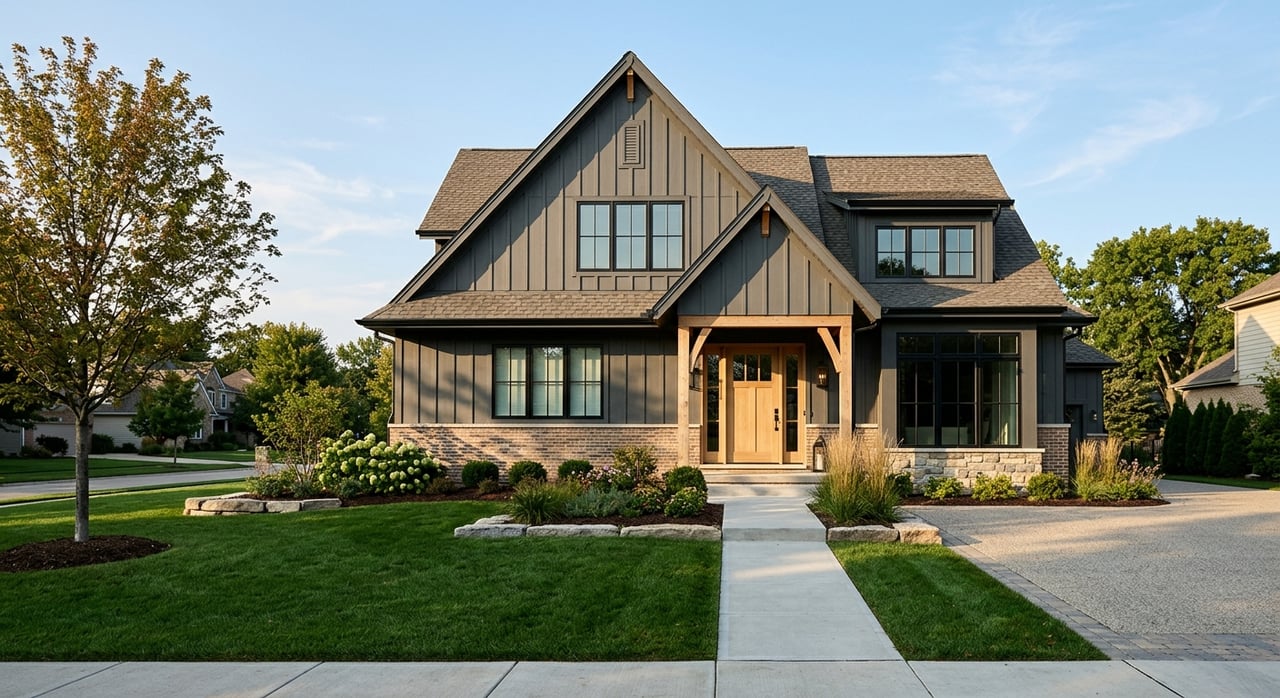
Meridian’s housing is also newer overall. Its consolidated plan says more than half of the city’s housing was built after 2000, with much of the remainder built between 1980 and 2000. That often translates to floor plans, lot layouts, and neighborhood design that can feel more current to today’s buyers.
What that means for your home search
If you want a wider range of housing types, Boise may give you more flexibility. You may find single-family homes, older resale properties, and more multifamily or infill-style options depending on the area you tour.
If you want newer construction and neighborhoods dominated by single-family homes, Meridian may feel more aligned. Many buyers are drawn to the sense of newer-space value, especially when they want modern layouts and a more residential pace.
Price points and entry options
Price is often where this decision gets real. Even when two cities share the same broader market, the value equation can look different.
As of March 2026, the median sale price was about $494,880 in Boise and $560,000 in Meridian. Census QuickFacts also shows a higher median owner-occupied home value in Meridian at $531,600, compared with $484,800 in Boise.
That does not necessarily mean Meridian is a completely different market. The research suggests the premium is tied mostly to newer housing stock, lot size, and subdivision type. In other words, buyers are often paying for newer homes and the style of development, not a separate metro economy.
Boise may also offer a somewhat wider entry-level funnel. Boise Regional REALTORS® reported that in February 2026, Boise and Meridian were the only Ada County cities with homes selling under $400,000 that month, with 34 such sales in Boise and 14 in Meridian. It is only one monthly snapshot, but it does suggest Boise often provides more lower-price entry points.
Rent and ownership costs
The cost differences show up in rentals too. Census QuickFacts lists median gross rent at $1,805 in Meridian and $1,446 in Boise.
If you are relocating and considering renting first, that gap matters. It can affect how long you want to test each area before buying, especially if you are balancing housing costs with commute or lifestyle priorities.
Commute and daily pace
Commute patterns are one of the biggest tie-breakers between Meridian and Boise. A home can look perfect on paper, but your day-to-day experience may come down to drive time and traffic flow.
Census QuickFacts puts mean travel time to work at 18.9 minutes in Boise and 22.4 minutes in Meridian. Meridian’s own reporting also points to average commute times around 20 minutes and notes traffic increases of 22% from 2010 to 2015 and 13% from 2015 to 2021.
Boise remains car-heavy too. Boise State’s Idaho Policy Institute reports that 88% of daily commutes use a car, and 60% of Boise commuters have travel times of 20 minutes or less. The same report found that downtown Boise has more biking, walking, and transit use than the city overall.
Regional planning data adds another layer. COMPASS says east-west travel demand and downtown Boise employment concentration remain central to mobility across the valley, and it projects Boise-Meridian trips will account for 40% of all daily trips by 2050. That matters if your work or regular errands pull you toward central Boise.
A smart touring strategy
If you expect to commute into downtown Boise or another central job hub, tour during weekday rush hour. That gives you a more realistic view of the route, the pace, and how the drive may feel several times a week.
If you work remotely, commute friction may matter less. In that case, your decision may come down more to housing style, lot size, neighborhood layout, and how close you want to be to Boise’s denser amenity base.
Which city fits your lifestyle?
There is no universal winner here. The better choice depends on what you want your daily life to look like.
Meridian may fit you if
- You prefer newer construction
- You want neighborhoods with a stronger single-family focus
- You like a more suburban, residential pace
- You are drawn to modern subdivision design and newer home features
This fit is supported by Meridian’s permit mix, housing stock, and long-term planning focus on parks, pathways, and connected community growth.
Boise may fit you if
- You want a broader mix of home types
- You like more established neighborhoods
- You want closer access to downtown culture
- You value proximity to the Greenbelt and foothills recreation
Boise’s housing analysis and city materials point to a more varied housing landscape and a more urban amenity pattern.
If you work remotely
Remote workers can often make either city work. Broadband subscription rates are high in both places, and commute times are still moderate by many metro standards.
That means your decision may be less about getting to an office and more about how you want your home and surroundings to function. Some buyers will prefer Meridian’s newer-space value proposition, while others will choose Boise for its established fabric and access to more concentrated amenities.
How to compare both cities efficiently
If you are short on time, compare Meridian and Boise in a structured way instead of trying to see everything at once. A side-by-side approach usually makes the decision clearer.
Start by touring one Boise infill or older-resale area and one Meridian new-construction community on the same day. Pay attention to the home styles, street patterns, nearby retail, and how each location feels as you run a few normal errands.
Then repeat the drive during a weekday commute window. That simple step can help you evaluate traffic, convenience, and the overall pace of life far better than listing photos ever will.
A focused comparison can also help you stay clear on tradeoffs. You may find that Boise offers more flexibility on price and housing type, while Meridian offers more of the newer-home experience you want.
Final thoughts on choosing your home base
Choosing between Meridian and Boise is less about picking the "better" city and more about matching your priorities to the right setting. Boise tends to offer a broader housing mix, more established areas, and stronger access to downtown and recreation amenities. Meridian tends to offer newer housing, a more single-family-oriented landscape, and a suburban pace shaped by fast growth.
If you want a clear plan for comparing both markets, the best next step is to tour with intention. The right guidance can help you weigh price, commute, housing style, and long-term fit without feeling overwhelmed.
When you are ready to explore Meridian, Boise, or both, FirstTeam® Real Estate can help you build a smart, structured home search around the way you actually live.
FAQs
Is Meridian or Boise more expensive for homebuyers?
- Based on March 2026 market data and Census figures, Meridian is generally more expensive, with a higher median sale price and higher median owner-occupied home value than Boise.
Does Boise offer more affordable homes than Meridian?
- Boise appears to offer a wider entry-level funnel, and a February 2026 Ada County snapshot showed more home sales under $400,000 in Boise than in Meridian.
Are homes in Meridian newer than homes in Boise?
- Yes. Meridian’s city planning data says more than half of its housing was built after 2000, while Boise has a more mixed housing stock that includes established neighborhoods and more multifamily growth in certain areas.
Is the commute from Meridian to Boise longer?
- Generally, yes. Census QuickFacts reports a mean travel time to work of 22.4 minutes in Meridian compared with 18.9 minutes in Boise.
Which city is better for buyers who want single-family homes?
- Meridian has a stronger single-family housing profile, with city data showing a higher share of single-family homes and a permit mix that continues to favor that type of development.
Which city is better for buyers who want access to downtown Boise amenities?
- Boise is typically the better fit if you want closer access to downtown culture, the Greenbelt, and foothills recreation, based on the city’s official housing and planning materials.